Multi-modal
Missions in poly-contextual modes — physical and digital, local and diasporic — meeting people where they are across interconnected communities and virtual spaces.
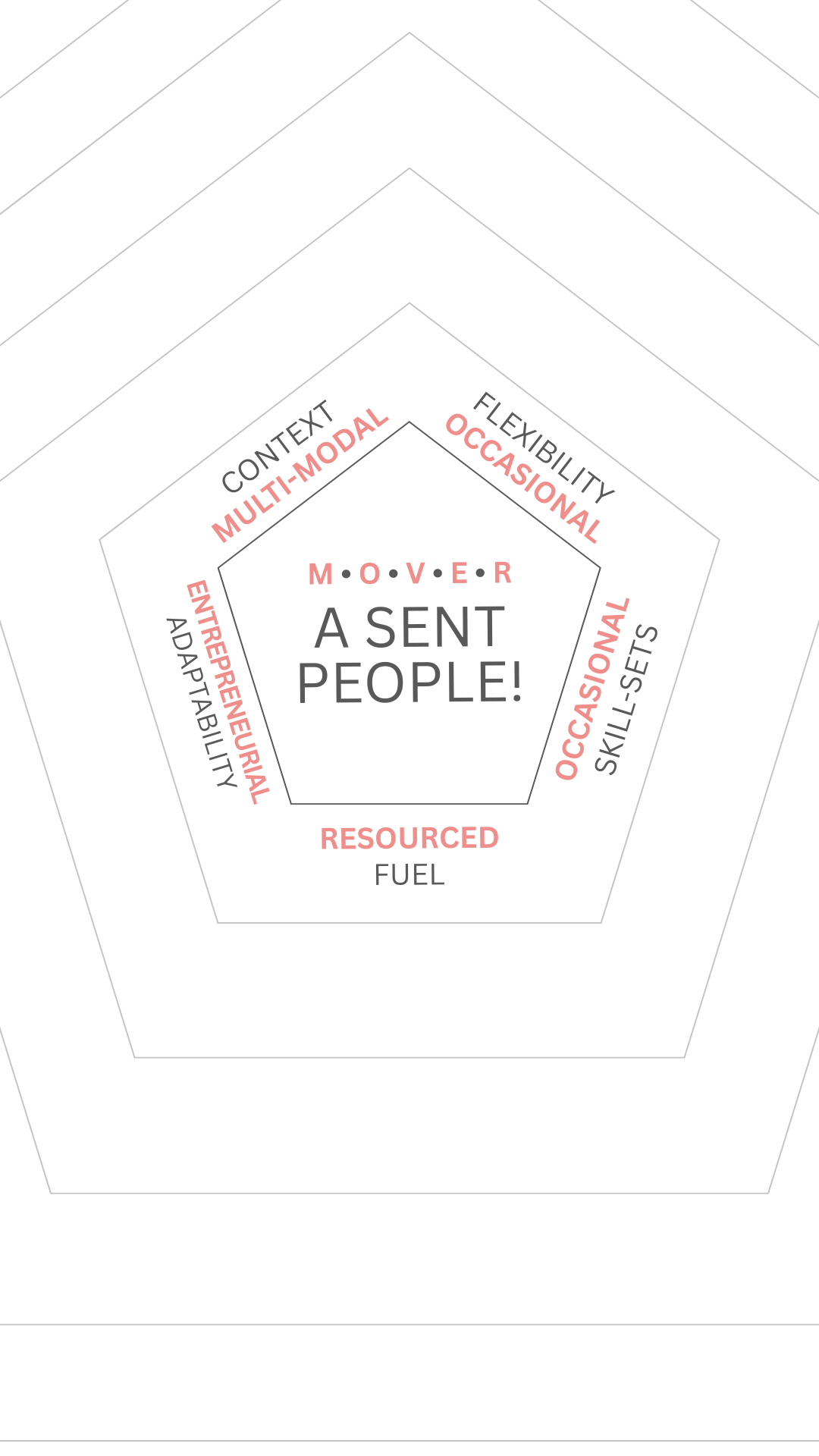
A framework for engaging a wider group of people in God's mission beyond traditional missionary pathways alone.
Scroll to readAfter a successful engineering career, one Singaporean believer took early retirement and has served non-residentially for seven years among a stateless people group in the Mekong region — training them in hydro-farming, engaging volunteers from a neighbouring nation, and responding to God's call with integral, holistic mission. He is not an official missionary of any church or agency, yet God has been at work.
He is typical of an alternative workforce God has been using where traditional methods or missionaries might struggle or not be welcome. The National Missions Studies (NMS 2019 and 2024) show that an increasing share of missionaries sent by our churches are engaged in what we have called “non-traditional” missions — and the number is far greater when we include those serving under the radar or not officially sent by their churches.
SCGM's acronym for missions that are multi-modal, occasional, vocational, entrepreneurial, and resourceful — with “sent” at the heart.
At the centre: we are a sent people
Missions in poly-contextual modes — physical and digital, local and diasporic — meeting people where they are across interconnected communities and virtual spaces.
Short- to medium-term, irregular, or annual engagements; non-residential trips; just-in-time crisis response; readiness for divine appointments in the flow of life and work.
Bi-vocational and tent-making workers using professional skills — engineering, medicine, education, and more — with missional intent, opposing the sacred-secular divide.
Business-as-mission, social enterprise, and the creative arts as platforms to reach places traditional missionaries cannot — innovative, adaptive, and Kingdom-minded.
Capital, training, spiritual formation, and partnership support that fuel multi-modal, occasional, vocational, and entrepreneurial missions toward kinetic impact.
In proposing MOVER, we present a call for all God's people to find their place in His mission to all the world. The Gospel sends us by His Spirit to show and share the good news of His saving grace and coming Kingdom.
Fundamentally, our mission means our committed participation as God's people, at God's invitation and command, in God's own mission within the history of God's world for the redemption of God's creation.— Chris Wright, The Mission of God
Missions must find culturally relevant ways to make the Gospel of Jesus Christ heard and seen — sending and supporting workers to unreached places, and calling every believer to be sent. Ultimately, we must all be MOVERs. Too often, missions becomes the concern of a committee or department alone; MOVER invites the whole church into mission.
In a BANI world — brittle, anxious, nonlinear, incomprehensible — single-mode strategies are not enough. MOVER missionaries are culturally intelligent, moving across physical, intra-cultural, virtual, and diasporic spaces with integrated focus.
From Philip and the Ethiopian eunuch to hospitality for international students, occasional missions is intentional, not random — open to short-term trips, tent-making connections, and scheduled partnership with indigenous believers.
Vocation (from Latin vocare, to call) means careers, hobbies, and expertise become arenas for mission — at home and abroad — as who you are and how you serve align with God's greater purposes.
Entrepreneurs experiment, take risk, and pioneer where there is no path — like Bezalel in Exodus 31 — using business, enterprise, and the arts to communicate the Gospel and transform communities.
MOVER missions need enabling power: seed funding, theological and intercultural training, and mentoring of indigenous and next-generation leaders — spiritual, relational, financial, and knowledge-based capital.
Every believer is called to know Jesus and make Him known. As the Father sent the Son, so He sends us — we are a sent people called to be MOVERs. Perhaps God is calling you to short-term missions with indigenous partners, to serve bi-vocationally overseas, as a tent-maker in a closed country, through a business that becomes your missions base, or as a digital missionary in virtual spaces.
MOVER missions is for you — and for your whole church. It is SCGM's invitation to re-examine who, what, where, and how we engage in God's mission, and to renew missions policies and conversations in the years ahead.
Read the full occasional paper, explore NMS findings, and share how your church is engaging God's mission.